Project Description
By Francisco Leandro (FSS/DGPA)
11 February 2026
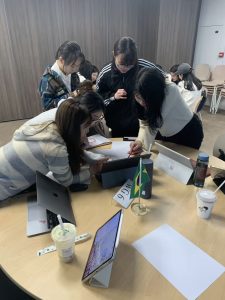
Photo courtesy of Francisco Leandro (2026), used with permission.
As universities worldwide grapple with the rapid rise of generative artificial intelligence (GenAI), one FSS/DGPA postgraduate programme has launched an innovative classroom exercise designed to strengthen students’ analytical skills and reduce over‑reliance on digital tools. The initiative, introduced this semester, aims to help master’s students develop the ability to defend their viewpoints, produce concise analytical essays, and conduct visual critical analyses. The goal is not to ban AI – but to ensure that students engage with it critically and responsibly. Our priority is to foster genuine learning. We want students to think deeply, articulate their own arguments, and apply the knowledge they gain in class, rather than relying uncritically on machine‑generated responses.
To achieve this, the exercise places students in a high‑stakes geopolitical scenario. Each working group acts as a technical commission tasked with preparing for an upcoming high‑level meeting between China and the nine Portuguese‑speaking countries (PSC), scheduled to take place in three months. It is only the second meeting of its kind, and, in the simulated setting, representatives from all ten nations are present in the room.
The students’ task? To shape and influence the agenda of that diplomatic gathering – mirroring the pressures and complexities of real‑world policy work. Nine working groups have been set up, each consisting of five or six students. In a nod to contemporary challenges, the groups operate in what instructors describe as a “5+” or “6+” format: the “+” refers to the inclusion of Microsoft Copilot as a controlled support tool. While each team has an appointed speaker responsible for coordination, the exercise encourages rotating speaking roles to ensure equal participation.
Alongside sharpening research and writing skills, the exercise also aims to cultivate a more engaging and collaborative academic environment. Lecturers hope it will promote intellectual exchange, peer‑to‑peer learning, and the confidence needed for students to form independent perspectives – rather than defaulting to AI‑generated answers. By reaffirming the value of human judgement in an era dominated by automated tools, the programme hopes to equip the next generation of analysts and policymakers with both technological literacy and critical autonomy.
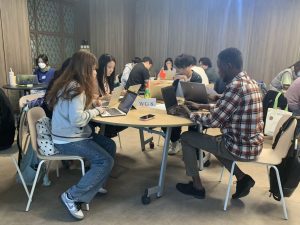
Photo courtesy of Francisco Leandro (2026), used with permission.
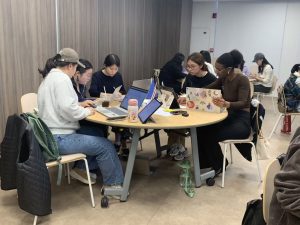
Photo courtesy of Francisco Leandro (2026), used with permission.